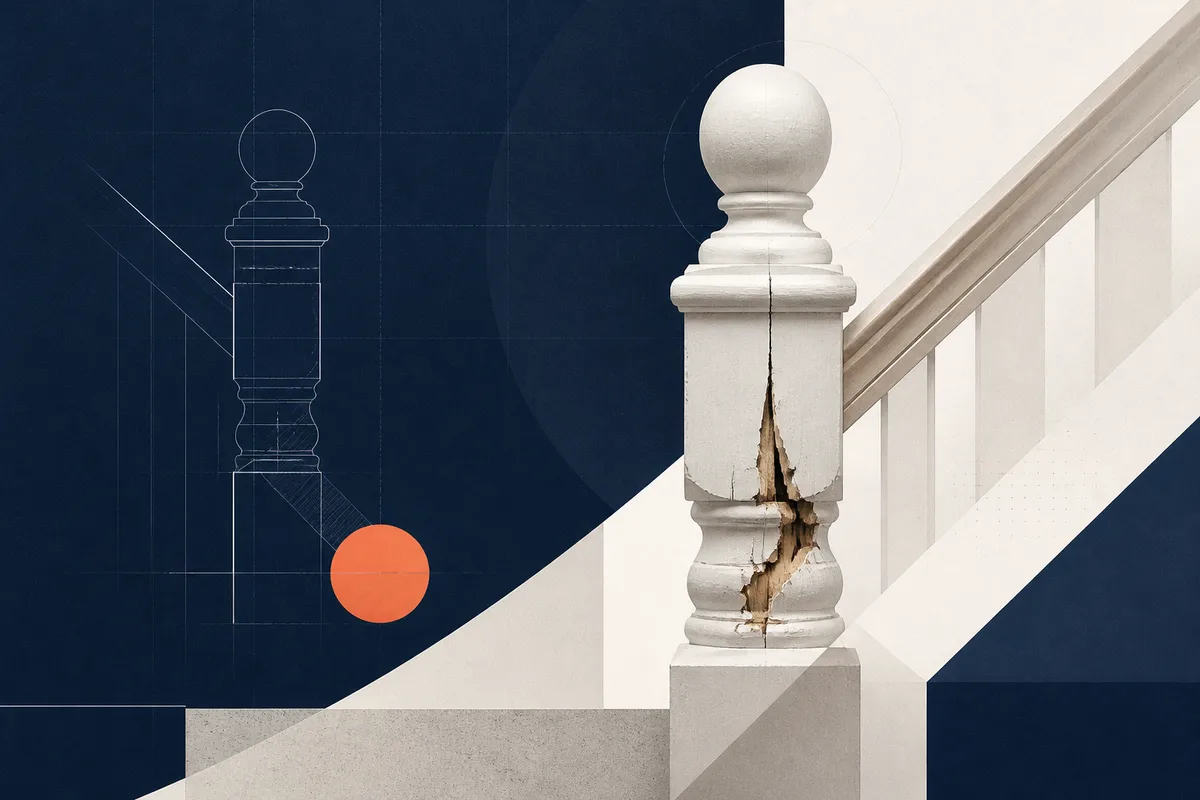
Why Newel Posts Fail and How to Restore Structural Integrity
A wobbly newel post is rarely just a cosmetic nuisance; it is a mechanical failure of the primary anchor point. In many rowhomes and suburban estates, the original construction relied on wood screws or lag bolts driven into thin subflooring rather than the structural joists below. Over time, the leverage applied to the top of a thirty-six-inch post acts as a pry bar, gradually enlarging the pilot holes and compressing the wood fibers until the hardware no longer bites.
This guide diagnoses the root causes of railing movement and outlines standards for a structural repair. It is intended for property owners and managers who need to differentiate between a simple hardware tightening and a full-depth structural intervention. Ignoring these signs can lead to total assembly failure or non-compliance with safety ordinances regarding decayed wood and defective surface conditions.
Why Handrail Systems Lose Their Rigidity
Standard stair railings fail because they are dynamic systems subjected to constant lateral pressure. A single loose connection at the base propagates tension through the handrail, eventually weakening every bracket and spindle in the run.
- Subfloor compression occurs when the wood beneath the post base yields under the constant leverage of the post.
- Undersized mounting hardware fails to penetrate the actual floor joist, relying instead on one inch of plywood or pine planking.
- Loosening of nails or fasteners occurs over time due to regular use and wear thisoldhouse.com.
- Structural shifts in the staircase or joist deflection creates gaps between the mounting surface and the post base, removing the friction required for stability.
The Professional Framework for Structural Diagnosis
Restoring a railing requires moving beyond the surface to address the physics of the load-bearing components. A systematic approach ensures the repair lasts the life of the home.
1Isolate the Movement Point
Before reaching for a wrench, observe the base of the post while applying moderate pressure to the handrail. If the post moves but the floor stays still, the issue is the internal fastening system; if the floorboards flex with the post, the subfloor itself requires reinforcement from below. This distinction determines whether the repair is a surface-level adjustment or a structural framing project.
2Inspect the Railing-to-Post Connection
Check the transition where the horizontal rail meets the vertical newel. Often, homeowners mistake tightening handrail brackets for a post repair, but if the rail is loose at the transition, it allows the post to rack independently. Use a mirror or borescope to check for sheared internal bolts or failed wood joints at these critical junctions.
3Evaluate Masonry Anchors on Stoops
For exterior railings on concrete stoops or brick steps, instability usually points to failed anchors. Periodically tightening carriage bolts and screws can eliminate wobbling, though the issue may return if the substrate is compromised decks.com. Ensure the mounting surface is sound before attempting to re-torque any hardware.
4Implement Through-Bolt or Structural Lag Solutions
A permanent fix wobbly newel post strategy involves bypassing the subfloor and anchoring directly into the rim joist or stringer. This often requires removing a small section of the ceiling below or using specialized tensioning kits, such as a post fastener system youtube.com. Standard wood screws are often insufficient for long-term stability.
The Mechanics of Subfloor Reinforcement
In many older properties, the floor joists may not align perfectly with the desired post location. When this happens, adding an additional post in the middle of a long run or adding blocking between joists can solve structural wobble issues sihandrails.com.
According to the Baltimore City Building Code, owners are required to maintain structures in good repair, which includes correcting decayed wood and defective surface conditions. When a post wiggles, the wood fibers at the attachment point are often already pulverized. A professional repair usually involves drilling out the damaged area, installing a hardwood plug or steel sleeve, and re-establishing a high-torque connection to the structural framing.
How Baltimore Stair Railing Helps
A professional structural assessment typically begins with a physical load test to identify exactly where the shear occurs. For Interior Wood Stair Railings, the scope of work usually includes removing the base trim, extracting failed fasteners, and installing heavy-duty structural lags or mounting plates. When contacting a contractor, provide photos of both the post base and the underside of the staircase if accessible. A sound scope of work should prioritize mechanical fastening into the framing over the use of adhesives or surface-level screws.
Frequently asked questions
How do I know if my newel post is dangerous?
If the post moves more than a fraction of an inch when you lean your weight against it, it is likely failing to meet safety standards. A post that shifts at the base can suddenly give way during a trip or fall, failing to provide the stability required for a safe stair railing.
Can I fix a wobbly post just by adding more screws?
Adding more screws into the same damaged wood usually compounds the problem by further weakening the post base. Structural stability requires the fasteners to bite into fresh, solid framing, which often means using larger diameter bolts or shifting the anchor points entirely.
Does the climate affect my stair railing stability?
Wood components naturally shrink and swell with seasonal changes. This cycle can loosen the friction fit of traditional joinery or fasteners, making stair railing structural repair a common necessity in older homes throughout the region.
What is the difference between a newel post and a baluster?
The newel post is the large structural pillar at the beginning, end, or turn of a staircase that supports the weight of the handrail. Balusters are the smaller vertical spindles between the posts; while they provide a safety barrier, they are not intended to be the primary load-bearing elements of the system.
Why is my iron railing loose on my front stoop?
Exterior railings are usually anchored into concrete or stone. Over time, moisture and temperature cycles can crack the masonry or loosen expansion bolts, causing a loose railing post diagnosis that requires new masonry drilling and weather-resistant epoxy.
Is a wobbly railing a concern during a home inspection?
Yes, home inspectors generally flag loose newel posts as a safety deficiency. Because railings are a critical safety feature, structural instability in the egress path is often required to be remediated to ensure the property meets basic safety standards.
What happens when you get in touch: you describe the situation, we ask the few questions that actually change the answer, and you get a clear scope and next step — no obligation.